



 |
Misinformation Scientific and health misinformation is one of the scourages of our times. We are working to understand the arguments people use in disparaging scientific and health information, as well as develop technical solutions towards helping people deal with the deluge. More |
|
Digital Memories This project investigates what will happen in the future as more "memories" become digital. The Digital Memories project focuses on an understanding of how artifacts (heirlooms, souvenirs, photographs, photographs, correspondence, collections, and their digital analogs) play roles in people’s everyday lives and how memories are preserved through, embedded in, and carried by those artifacts. |
|
 |
Q&A Communities The SocialWorlds Research group has conducted numerous studies of Q&A communities. Our interest has been in how these communities function. The first study was of Java Forum, and it detailed how the community functioned and how expertise was distributed and shared. We then studied Yahoo Answers, along with its sister sites Naver in Korea and Baidu in China. We also compared the three sites. These studies examined why answerer helped, and whether there were intercultural differences. |
|
QuME QuME tackles the expertise location and maintenance problem for large-scale Q&A communities. It does so by automatically distributing tasks to people who have the necessary expertise.Expertise finders are an important class of collaborative recommendation systems, but they suffer from a general problem: Current expertise finders, both commercial and research, cannot infer expertise levels very well. QuME includes novel algorithm to infer expertise levels, making a larger range of social interaction possible. |
|
 |
Expertise Sharing Our group was one of the originators of expertise sharing as an area of study. Our work has included expertise finders, people recommenders, and collaborative help systems. As well, we have conducted many studies of how people helped one another through computer-mediated communications and within organizations. As the span of networks and computational systems expanded, the scope of our study expanded to Internet-scale systems and communities. Recent work has also expanded to Q&A communities (question-and-answer) communities and social search. |
 |
Escalier Escalier is a new architecture for community-sourcing configuration settings, and by extention other types of pervasive data such as activity traces. Users can find out what system configurations will be stable in return for giving the community their configuration data. By doing this, both parties get something valuable: End-users can determine whether their system configurations will work, and the community as a whole gets a collaboratively-built datastore, or collective memory. More> |
|
Arkose Online discussions such as a large-scale community brainstorming often end up with an unorganized bramble of ideas and topics that are difficult to reuse. A process of distillation is needed to boil down a large information space into information that is concise and organized. Arkose is a system-augmented approach to the problem - a set of tools with which human editors can collaboratively distill a large amount of informal information. |
|
|
QuME QuME tackles the expertise location and maintenance problem for large-scale Q&A communities. It does so by automatically distributing tasks to people who have the necessary expertise.Expertise finders are an important class of collaborative recommendation systems, but they suffer from a general problem: Current expertise finders, both commercial and research, cannot infer expertise levels very well. QuME includes novel algorithm to infer expertise levels, making a larger range of social interaction possible. |
|
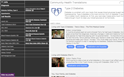 |
Health Translations In our study of people with diabetes, high blood pressure, and kidney disease in Flint, Michigan, we found people actively trying to manage their health in the face of poverty, potentially violent conditions, high stress, and a distrust of institutionalized medicine. More specifically, we observed people translating the health information they're handed into the context of their everyday lives - creating local strategies for chronic illness management. Currently we are constructing a generalized application, named FIT, to help people understand their chronic conditions. FIT is video-based and personalized to individuals in their local contexts. MORE> |
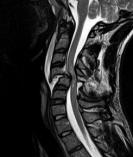 |
Spinal Cord Injury/Disease In this project, we conducted a series of ethnographically-based studies to understand how people with spinal cord injury/disease and their caregivers could fruitfully use pervasive environments including sensors. We are in the midst of designing and constructing a system, Data Checkers, that allows patients to control for themselves the release of data to other caregivers and care team members. More> |